Buying acreage in New River can feel like a dream come true until you realize the land itself is only part of the decision. If you are picturing room to spread out, desert views, and flexibility for future plans, you are not alone. The key is knowing how access, water, septic, zoning, and land conditions can affect daily life and long-term value. Let’s dive in.
Why New River acreage is different
New River is an unincorporated community in Maricopa County with a 2020 population of 17,290, according to U.S. Census QuickFacts. That unincorporated status matters because many acreage properties fall under county rules instead of city systems and services.
In practical terms, buying land here is not just about square footage or mountain views. Maricopa County planning materials for the Daisy Mountain and New River area track things like growth patterns, water resources, open space, transportation, slopes, and FEMA floodway areas. That means each parcel can come with its own mix of opportunities and limitations.
Start with access and roads
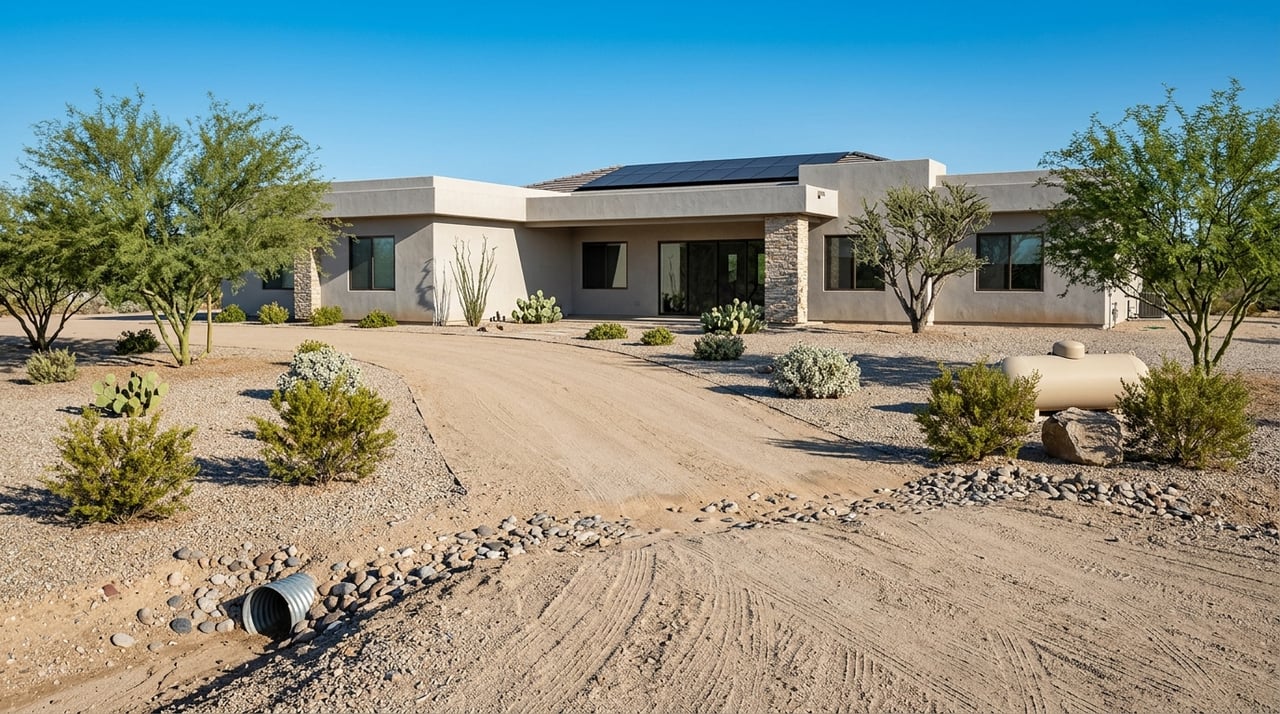
One of the biggest acreage mistakes is assuming the road situation is simple. In unincorporated Maricopa County, many roads are not part of the county roadway network, and some access routes are private roads or easements.
According to Maricopa County’s Roadway Maintenance information, private access or easement roadways often run along private property lines and are not maintained by MCDOT. Before you buy, you will want to confirm whether the road is county-maintained, privately maintained, or dependent on a recorded access easement.
That question matters for more than convenience. If a road needs grading, chip sealing, or paving, permits and engineering review may be required, especially if the work could change historic drainage patterns. For acreage buyers, road access is both a title issue and a day-to-day livability issue.
Questions to ask about access
- Is the road county-maintained, private, or easement-based?
- Is there recorded legal access to the parcel?
- Who pays for maintenance or repairs?
- Will planned road improvements require county permits?
- Is the driveway usable for service vehicles and emergency access?
Verify zoning before you plan improvements
If you are buying acreage because you want flexibility, zoning needs to be checked early. Maricopa County’s zoning ordinance regulates growth and development in unincorporated areas and includes rural zoning districts, as explained on the county’s Zoning Ordinance page.
This becomes especially important if you are thinking about horse facilities, barns, arenas, chickens, or other agricultural uses. Maricopa County also notes in its agricultural and equestrian guidance that some agricultural uses may be exempt, some may be permitted in rural districts, and more intensive equestrian uses may require special approval.
The bottom line is simple: never assume a parcel supports your plans just because nearby properties look similar. Parcel-level zoning verification can help you avoid expensive surprises after closing.
Land-use items to confirm
- Exact zoning district
- Allowed residential and accessory uses
- Rules for barns, corrals, arenas, and livestock
- Whether any special use approval is needed
- Whether CC&Rs or HOA rules apply
- Whether fencing assumptions need extra verification
Know your water source
On acreage, water is one of the most important systems to understand. A property may be served by a public water system, a private water system, a shared setup, or an individual well.
The Arizona Department of Environmental Quality says a public water system has 15 or more service connections or serves at least 25 people. Smaller systems are considered private and are not regulated by ADEQ in the same way. If the property relies on a private well, ADEQ encourages owners to test water periodically and review nearby land uses and geology.
Maricopa County’s New River planning materials map wells, service areas, utilities, and groundwater depth. The Arizona Department of Water Resources also provides a well registry and Wells55 tools that can help identify well records and nearby well information. Since wells are registered to the parcel where they are physically located, that detail should be confirmed during due diligence.
Water questions worth asking
- Is the property on public water, a shared source, or a private well?
- What is the well registration number?
- How deep is the well?
- What is the pump age and service history?
- Is there water-quality testing history?
- Is there backup water storage or a contingency plan?
Septic is not a small detail
Many acreage homes are not connected to sewer, which means septic becomes a major part of the property review. ADEQ explains that onsite wastewater treatment facilities are common across Arizona and are commonly known as septic systems.
In Maricopa County, septic permitting is handled at the county level. The county process includes site and soils evaluation, system design, alterations, transfers, closure, and permits. The county also requires sewage-disposal verification before a primary-use building permit can move forward.
You will also want to understand spacing between water and wastewater systems. ADWR notes that wells generally must stay 100 feet from septic tanks or sewage disposal areas unless otherwise authorized. That makes septic location, condition, and permit history especially important on land where future additions may be considered.
Septic items to review
- Septic permit number
- System age and type
- Last inspection or pumping date
- Reserve area location
- Distance between septic components and well
- Any needed alterations for future improvements
Check flood and drainage risk early
Desert land can still flood, and New River buyers should take that seriously. Maricopa County notes that flooding occurs during summer monsoons and winter rainstorms, and work within designated floodplains may require permits through the Flood Control District.
That can include building, grading, filling, installing walls or fencing, or making other man-made changes. The county’s floodplain information also notes that lenders may require flood insurance if a property is in a FEMA-determined 100-year floodplain.
This is one of those issues that can affect both cost and use. A parcel may look dry on a showing day, but washes, drainage paths, and floodplain boundaries can change how and where you build, fence, or improve the land.
Red flags to investigate
- FEMA floodplain location
- Wash corridors or drainage channels
- Prior flooding or erosion issues
- Limits on grading or fill work
- Flood insurance requirements from a lender
Wildfire and upkeep matter more on acreage
A larger lot often means more maintenance, not less. For properties near brush, open space, or natural desert areas, wildfire readiness should be part of your planning.
The Arizona Department of Forestry and Fire Management says homes in wildland environments are vulnerable to wildfire and recommends defensible space practices such as removing dead grass, trimming trees, and clearing debris from roofs and gutters. On acreage, this also ties back to good access for emergency vehicles.
Dust control and grading can also become recurring responsibilities. Maricopa County’s dust-control guidance applies to open areas, unpaved parking, vehicle-disturbance areas, and livestock activity areas, including horse corrals and arenas.
Confirm electric service by address
Utilities are another area where assumptions can cost you time. Just because nearby homes have service does not mean every parcel is served the same way.
APS advises customers to verify service availability by address before starting service. If you are buying vacant land or a home with future expansion in mind, that extra check is worth doing before you finalize plans.
A practical New River acreage checklist
If you want a simple way to approach acreage due diligence, focus on the systems that make the property usable every day.
| Category | What to confirm |
|---|---|
| Access | Road type, maintenance responsibility, legal easements, permit needs |
| Water | Public system or well, registration, depth, quality history, backup plan |
| Wastewater | Septic permit, age, inspections, reserve area, spacing from well |
| Zoning | Parcel zoning, allowed uses, accessory structures, approval requirements |
| Hazards | Floodplain, drainage, slopes, wildfire exposure, emergency access |
| Utilities | Electric service availability by address |
If you plan to make improvements, Maricopa County’s Permit Center is the county’s entry point for planning, flood control, transportation, environmental permits, and inspections.
Why local guidance helps
Acreage purchases are rarely plug-and-play. Two properties with the same number of acres can have very different road access, utility setups, drainage concerns, or land-use limits.
That is why it helps to work with someone who understands how to slow the process down in the right places. You want to ask better questions before you buy, not discover missing answers after closing.
If you are thinking about buying acreage in New River or anywhere in the West Valley, Mark Jennings can help you look beyond the listing photos and focus on the details that matter most.
FAQs
What should you check first before buying acreage in New River?
- Start with access, water source, septic, zoning, and floodplain status because those systems often shape how you can use the property.
How do private roads affect a New River acreage purchase?
- Private or easement roads may not be maintained by Maricopa County, so you should verify legal access, maintenance responsibility, and whether future road work may require permits.
Why is zoning important for New River horse property or rural land?
- Zoning determines what uses are allowed on the parcel, including barns, arenas, livestock, and some agricultural or equestrian activities that may need special approval.
What water questions matter most for acreage in New River?
- You should confirm whether the property uses public water or a well, then review registration details, depth, pump history, and any available water-quality information.
Does a septic system change what you can do with acreage in New River?
- Yes, septic location, permit history, reserve area, and spacing from a well can affect future additions, improvements, and permitting.
Can desert acreage in New River still have flood risk?
- Yes, Maricopa County notes that flooding can happen during monsoons and winter storms, so you should review floodplain maps, drainage patterns, and possible insurance or permit requirements.